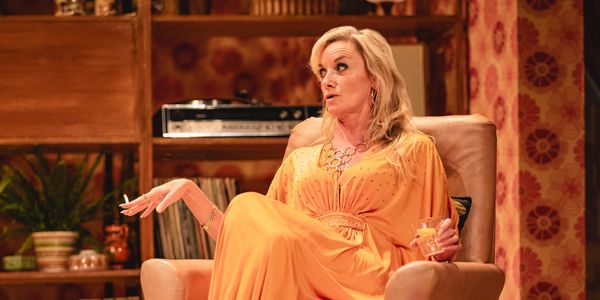
Opened in 1881 as the Comedy Theatre, the Harold Pinter Theatre is a charming and intimate West End venue designed by Thomas Verity. Renamed in 2011 to honour the Nobel Prize-winning playwright, it has a rich history of hosting a diverse range of productions, from comedies to serious dramas. Its compact size and traditional Victorian architecture create a wonderfully immersive and engaging atmosphere for audiences, making every performance feel personal.
Share this theatre
Seating
- StallsGround floor immersion, but front rows strain necks; overhangs affect the back.
- Dress CircleOften premium, offering a balanced view, but mind the front rail and back overhang.
- Royal CircleAffordable, but expect restricted legroom, a high view, and front rail issues.
- BalconyBudget choice: high, distant, many stairs, but surprisingly clear acoustics.
Stalls
For an immersive experience, the Stalls on the ground floor deliver, especially from central seats. From row H back, the rake is generally good, providing clear sightlines over heads.
However, the front rows (A-E) are less steeply raked; you might find yourself looking up at the stage, potentially straining your neck, particularly during productions with high-level action. Legroom is average throughout, though aisle seats offer a marginal improvement.
The Dress Circle overhang begins around Row K/L, cutting off the very top of the stage for seats further back, especially in the last few rows (P-R). This obstruction is more pronounced with elaborate, tall sets or high-flying elements.
While central Stalls seats offer proximity, those at the ends of rows will have a slightly angled view.
Dress Circle
Often considered a premium viewing area, the Dress Circle on the first floor offers a superb vantage point. The rake is generally good, ensuring clear sightlines over heads.
Front row (A) provides an excellent, unobstructed view, though shorter patrons might find the safety rail slightly intrusive. Legroom is generally comparable to the Stalls, with aisle seats offering marginal improvement.
The Upper Circle overhang affects the very back rows (H-J), potentially cutting off the very top of the stage, similar to the Stalls. Many prefer the overall perspective from here for a comprehensive view of the entire stage picture, balancing proximity with a broader overview.
Seats at the extreme sides can offer a slightly angled view and may have minor restrictions due to the proscenium arch.
Royal Circle
The Upper Circle, on the second floor, provides more affordable seating options. The rake is quite steep, which aids in maintaining sightlines over heads but can feel high for those with vertigo.
Legroom is noticeably more restricted in this section compared to the Stalls and Dress Circle, particularly in the front rows. The safety rail in front row (A) can be a significant obstruction for shorter individuals, often requiring them to lean forward to see the full stage.
Views are distant but generally clear for the main stage action. However, the proscenium arch can cut off the extreme sides of the stage for seats furthest to the sides, and the very top of the stage might be obscured by the theatre's ceiling or lighting rig for the very back rows.
This section is best suited for those on a budget who prioritize seeing the performance over an intimate or perfectly framed view.
Balcony
The Balcony, the highest and steepest tier, offers the cheapest seats in the house and is ideal for budget-conscious bookings. While the sharp rake means you'll be looking down from a high vantage point where performers feel small and distant, the theatre's exceptional Victorian acoustics ensure dialogue remains perfectly clear even from the very back row.
To get the best view, it's wise to avoid seats at the extreme edges; the horseshoe curve cuts off a substantial portion of the stage closest to you, making central seats far superior. Additionally, keep in mind that the Harold Pinter Theatre does not have an elevator, meaning accessing the Dress Circle, Royal Circle, or Balcony will require climbing a significant number of stairs.
See the view from your seat
SeatPlan has photographs taken from individual seats at the Harold Pinter Theatre, alongside a full seating plan and reviews from people who sat there. Worth a look before you commit to a restricted-view seat.
View seat photos and planAffiliate link — we may earn a commission, at no cost to you.
Staying nearby
The nearest hotels to the Harold Pinter Theatre, for anyone travelling in for a show rather than heading home after it.
- Zedwell Piccadilly Circusabout 5 min walk
- Hotel Café Royalabout 5 min walk
- Ham Yard Hotelabout 5 min walk
Hotels.com affiliate links — we may earn a commission, at no cost to you. Prices and availability are shown on their site.
Facilities
Toilets
Gents and Ladies toilets are available on Stalls, Royal Circle, and Balcony levels. Accessible toilets are located in the Foyer.
Available for coats, bags, suitcases, bulky items, and folded bikes. Limited space.
Sales for future shows end 60 minutes before each performance; from 60 minutes prior until curtain time only sales for the upcoming performance can be made.
Location
Harold Pinter Theatre, Panton Street, London, SW1Y 4DN
Getting there
nearest first
- 3 min
Piccadilly Circus
PiccadillyBakerloo - 5 min
Leicester Square
NorthernPiccadilly - 10 min
Charing Cross
NorthernBakerlooNational Rail
Step-by-step walking directions
The Harold Pinter Theatre is centrally located in London's West End. The nearest Tube stations are Piccadilly Circus (Piccadilly and Bakerloo lines), which is approximately a 3-minute walk, and Leicester Square (Northern and Piccadilly lines), about a 5-minute walk. Charing Cross (Northern and Bakerloo lines, National Rail) is also within a 10-minute walk. Numerous bus routes serve Piccadilly Circus and the surrounding areas.